Skip to content


Table of Contents
When you hear “laser resurfacing,” you may assume a week at home with a red, peeling face. That reputation came from older ablative lasers, which left a significant amount of heat in the skin during resurfacing. The UltraClear cold fiber laser operates at a different wavelength, and the word that keeps coming up around it is “cold.”
At United Medical and Aesthetics, patients ask us what that word actually means for their skin. Here is how the technology works, what it treats, and what the appointment involves.
What is UltraClear cold fiber laser resurfacing?
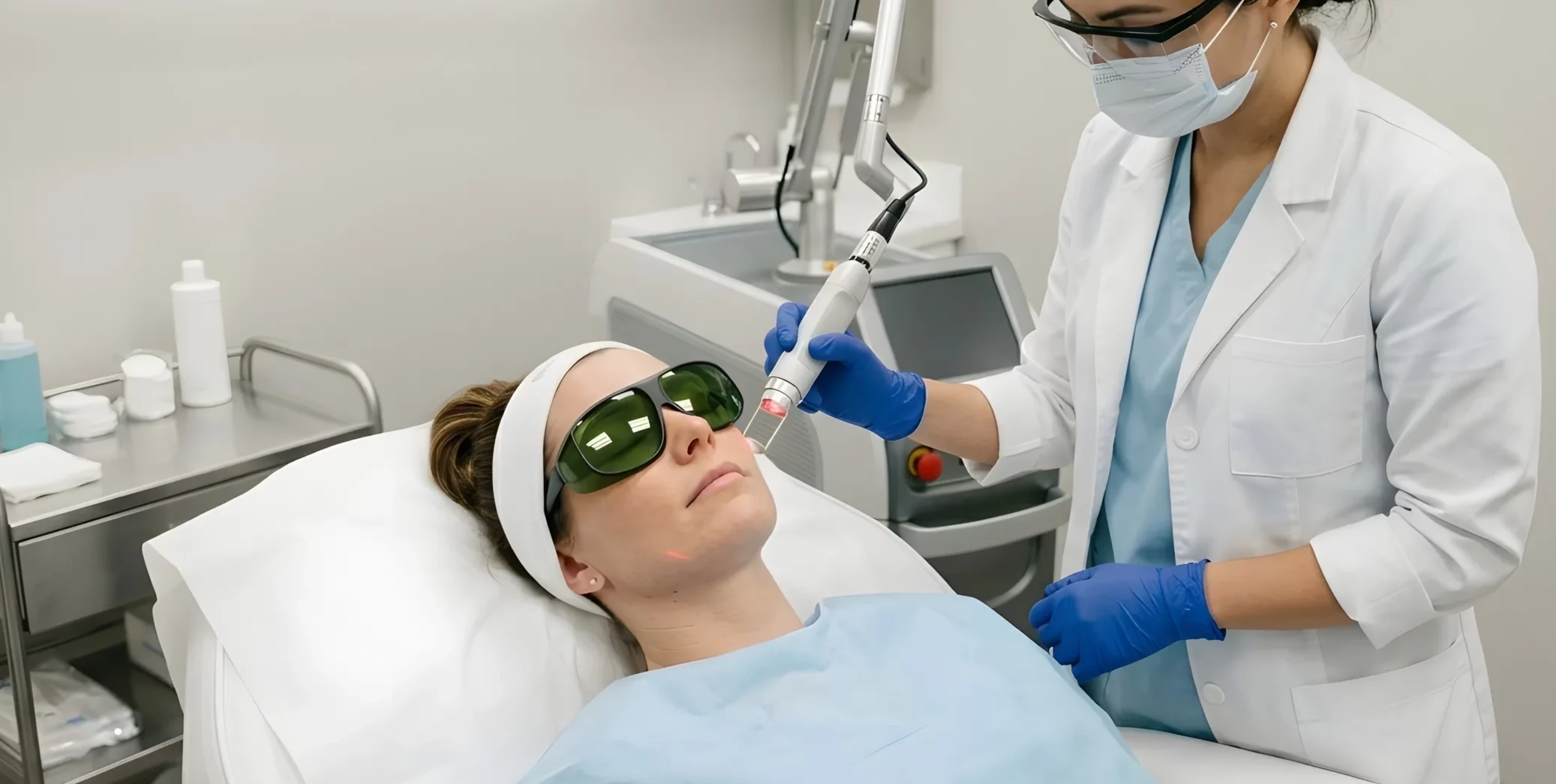
UltraClear® is an FDA-cleared fractional laser that uses a 2910 nm wavelength to remove microscopic columns of skin while limiting the heat left in the surrounding tissue. That controlled process prompts the skin to rebuild collagen over the following weeks, and most patients need only a day or two of visible recovery.
What Is UltraClear® Laser Resurfacing?
UltraClear laser resurfacing is a fractional ablative treatment performed with a 2910 nm fiber laser. The wavelength sits at the peak absorption point for water in the skin, allowing the energy to work precisely where it lands.
The device is FDA-cleared for dermatological procedures requiring skin resurfacing, along with fine lines and wrinkles, benign pigmented lesions, vascular dyschromia, and scars. We use it at our Wilmington practice alongside our other resurfacing platforms, with settings selected during a consultation.
What Does “Cold Fiber” Mean?
“Cold” describes the amount of residual heat left behind in surrounding tissue, rather than the temperature a patient feels during treatment. Because the 2910 nm wavelength is absorbed so efficiently by water, tissue vaporizes almost immediately at the point of contact, and the energy dissipates quickly instead of spreading sideways as thermal damage.
“Fiber” refers to the fiber laser technology delivering that energy, which produces consistent beam quality from pulse to pulse. The practical result of both: a resurfacing treatment that reaches meaningful depth while keeping collateral heat low, which is part of why UltraClear laser recovery time tends to be measured in days rather than weeks for most patients.
How Does Laser-Coring Technology Works Beneath the Surface?
Laser-Coring creates narrow vertical channels down through the skin rather than treating the entire surface at once. The untreated skin left standing between each channel acts as a healing reservoir, supplying the cells that close the treated columns.
That controlled micro-injury is what signals the body to produce new collagen and elastin over the following weeks and months, which is the basis of UltraClear laser skin rejuvenation. Depth and density are both adjustable so that the same device can deliver a light surface pass or a deeper remodeling treatment, depending on the concern and the skin being treated.
How Does It Differ From Traditional Ablative Resurfacing?
Traditional CO2 resurfacing works at 10,600 nm. Water absorbs that wavelength less efficiently, so more heat spreads into the tissue around each treated zone, which historically contributed to longer recovery periods after deep resurfacing sessions.
UltraClear® aims for comparable remodeling with a shorter visible recovery window, though outcomes depend heavily on the settings used and on individual skin. CO2 resurfacing remains an appropriate and effective choice for many patients, and our Wilmington practice offers both, including HELIX CO2 and CoolPeel®. The right platform is a clinical decision made in person.
What Skin Concerns Is UltraClear® Used For and Who Does It Suit?
Among the UltraClear laser benefits patients ask about most often, these concerns come up repeatedly:
- Early skin laxity and softening definition along the lower face and jawline
- Deep wrinkles, fine lines, and crepey texture
- Uneven tone, rough texture, and the appearance of enlarged pores
- Maintenance for patients who want to support collagen production over time
Good candidates are generally adults noticing texture change, wrinkle depth, or early laxity who want resurfacing without an extended recovery. Providers can adjust settings for different skin tones and sensitivities. During consultation, your provider reviews Fitzpatrick skin type, active breakouts or infections, recent sun exposure, and medication history before confirming candidacy.
What Is the Treatment Like and What Does Recovery Involve?
Most patients describe the sensation as mild warmth or tingling rather than pain, and you can apply topical numbing cream beforehand for added comfort. A facial treatment is typically completed in a single office visit.
Downtime is generally minimal. Most people experience slight redness or swelling for one to two days and return to normal activities quickly.
Many patients notice smoother skin after one session, and a series of two to three sessions is sometimes recommended depending on goals. Results typically last about 12 to 18 months and depend on skin condition, sun exposure, and home care. Individual results vary.
Common Questions About UltraClear® Laser Resurfacing
Is UltraClear® the same as a CO2 or CoolPeel® treatment?
No. All three resurface skin, but UltraClear® uses a 2910 nm fiber laser while CO2 platforms operate at 10,600 nm.
How soon do results show up?
Surface smoothness is often visible within the first week or two. Collagen remodeling continues gradually over several months.
Can it treat areas other than the face?
Yes. Your provider can adjust treatment parameters for other areas.
Does Wilmington sun exposure affect timing?
It can. Many coastal patients schedule resurfacing for cooler months and commit to daily sun protection afterward.
Thinking About UltraClear® in Wilmington?
If texture, wrinkle depth, or early laxity has been on your mind, a consultation is the simplest way to find out which resurfacing platform fits your skin. Aleta Sloan, PA-C, and the team at United Medical and Aesthetics will review your goals and skin type and recommend an approach honestly, including when something other than UltraClear® Laser Treatment in Wilmington, NC, is the better option. Book an UltraClear Laser Consultation today.