
 Skip to content


If dark spots, uneven tone, or a blotchy complexion have become harder to ignore, cumulative UV exposure is likely the cause. Sun damage & pigmentation treatment in Wilmington, NC, at United Medical and Aesthetics addresses that damage at its source. Aleta Sloan, PA-C, offers non-surgical pigmentation treatment tailored to your skin tone and pigmentation type.
What causes hyperpigmentation and sun spots begins with UV radiation. When skin is exposed to UV light, melanocytes respond by producing excess melanin as a protective response. Over time, that melanin clusters unevenly, producing flat brown patches, solar lentigines, and diffuse discoloration across sun-exposed areas. Treating sun-damaged facial skin requires clearing those existing pigment deposits while preventing new ones from forming, a two-part approach that surface skincare alone cannot achieve.
Wilmington’s coastal geography makes sun damage a year-round concern. The city averages more than 200 sunny days per year, with summer UV indexes regularly reaching 8 or higher. Activities along Wrightsville Beach, the Cape Fear Riverwalk, and Carolina Beach compound daily UV accumulation.
Pigmentation concerns do more than alter skin tone. Dark patches scatter light unevenly, dulling natural radiance. Blotchy discoloration draws the eye and makes the complexion look aged or weathered. Many patients find that foundation and concealer provide temporary coverage but do nothing to address the underlying pigment. Clinical treatment produces lasting clarity that camouflage cannot replicate.
How to fade dark spots and sun damage on skin starts with two goals: clearing existing deposits and blocking new UV exposure. Restoring even skin tone and clarity is most effective when clinical treatment combines with consistent daily habits:
At United Medical and Aesthetics, Aleta Sloan, PA-C, offers sun spot and hyperpigmentation reduction through treatments matched to each patient’s pigmentation type, skin tone, and goals:
Patients with concurrent concerns can explore combination protocols for uneven skin texture, fine lines and wrinkles, and skin laxity.
Sun damage & pigmentation treatment addresses all areas of the body where UV accumulation causes visible discoloration:
Non-surgical options for severe sun damage are well suited to adults who:
A consultation with Aleta Sloan, PA-C, will assess your skin type, Fitzpatrick skin tone, and the depth of damage to confirm candidacy and recommend the appropriate protocol.
How long pigmentation treatment results last depends on treatment depth and ongoing sun protection:
Treated spots are permanently cleared. Restoring even skin tone and clarity long-term requires daily SPF to prevent new pigmentation from forming.
Wilmington’s proximity to Wrightsville Beach, Carolina Beach, and Kure Beach means residents accumulate significant UV exposure year-round. Wrightsville Beach’s active outdoor culture draws surfers, paddleboarders, and runners who accumulate consistent sun exposure year-round, often resulting in layered pigmentation rather than isolated sun spots.
Aleta Sloan, PA-C, and Dr. Timothy Sloan bring 70+ years of combined medical experience to every treatment. Here is what sets their approach apart:
Cold-fiber laser resurfacing with UltraClear® is widely considered the most effective non-surgical option for treating sun-damaged facial skin in Wilmington. It breaks up existing pigment deposits and stimulates fresh, clear skin renewal without the risk of hyperpigmentation associated with heat-based lasers.
Hyperpigmentation occurs when UV radiation stimulates melanocytes to overproduce melanin, resulting in flat brown spots, freckling, and patchy discoloration in sun-exposed areas. In Wilmington’s coastal climate, year-round UV accumulation accelerates that process significantly.
Fading dark spots and sun discoloration requires clinical laser resurfacing to clear existing pigment deposits, combined with daily broad-spectrum SPF and medical-grade melanin inhibitors to prevent new ones.
Treated sun spots are permanently removed. New pigmentation can develop with future unprotected sun exposure, however. Daily SPF and periodic maintenance sessions are essential to protect and sustain results long-term.
Many patients notice significant clarity after a single session. A series of 2 to 3 sessions spaced 4 to 6 weeks apart produces optimal results for deeper or long-standing sun damage and layered pigmentation.
Downtime is minimal. Light protocols involve 24 to 48 hours of mild redness followed by gentle micro-peeling of darkened pigment over a few days. Deeper settings may involve 3 to 5 days of light flaking.

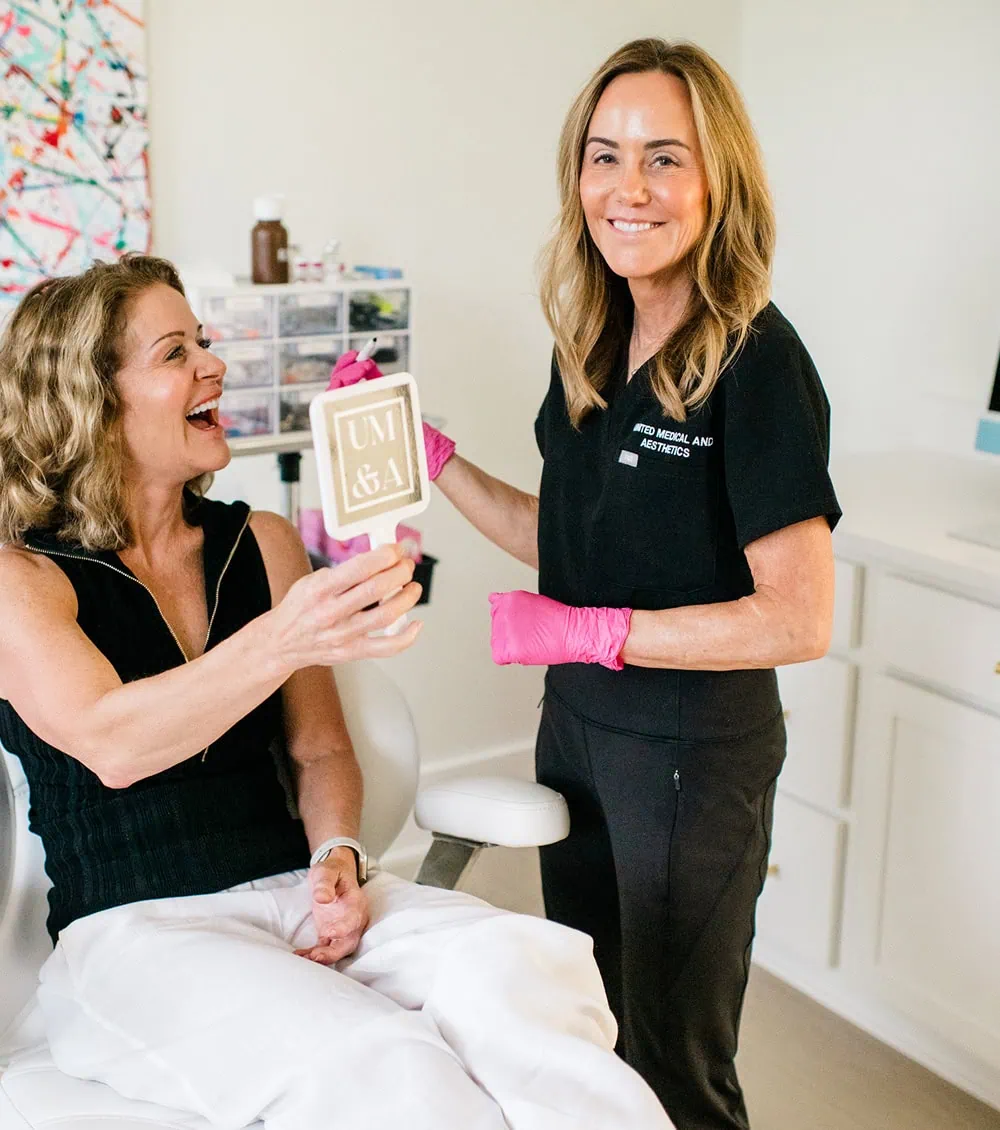
If dark spots, uneven tone, or sun damage are affecting your confidence, Aleta Sloan, PA-C, and her team are ready to help. They offer sun damage & pigmentation treatment in Wilmington, NC, built around your skin tone, pigmentation history, and goals.
United Medical and Aesthetics is a 5-star med spa directed by Dr. Timothy and Aleta Sloan, PA-C, who have a combined 70 years of medical and clinical experience. We combine our medical knowledge, best lasers, injectables, and medical-grade skincare to help you achieve the skin you love.